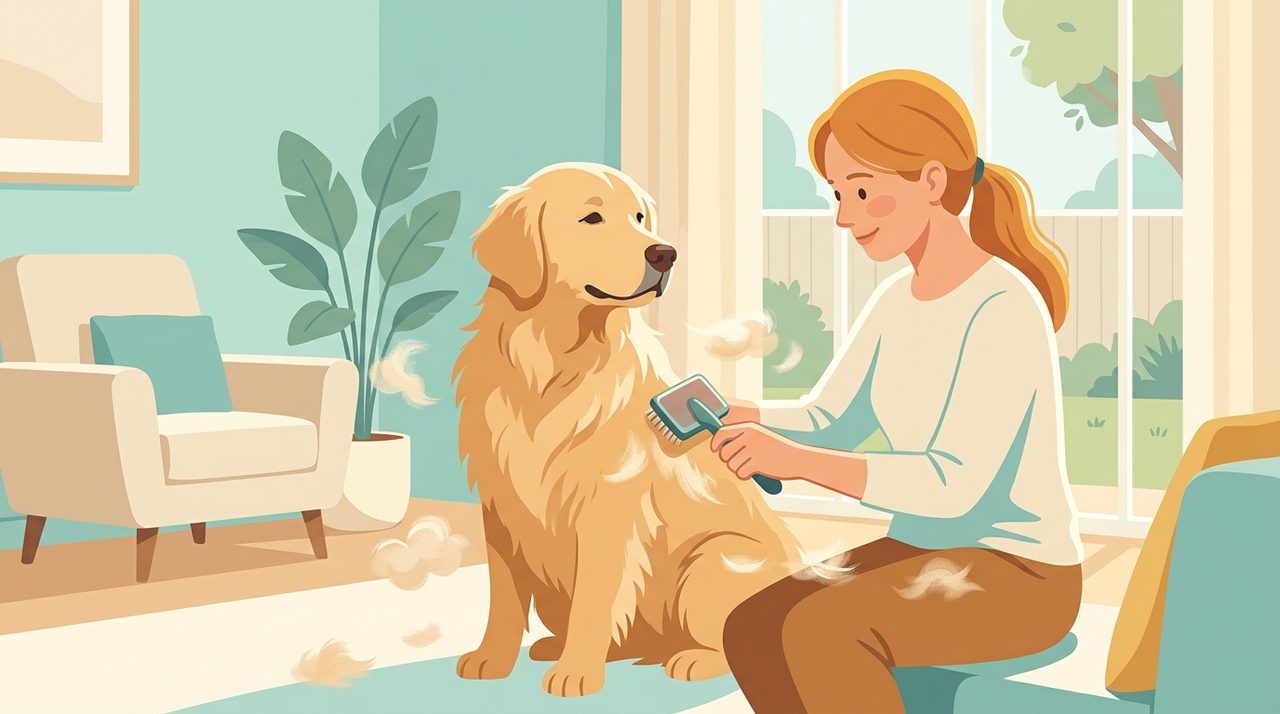
Shedding is a normal part of dog ownership, but the right brushing routine can keep loose fur off your floors and your dog's coat healthy. Deshedding removes loose hair, especially the dead undercoat in double-coated dogs, before it lands on your couch.
In this guide you'll learn how deshedding brushes work, how to match a tool to your dog's coat, how often to brush, and when a professional groomer can help with heavy shedding or matting.
What Does Deshedding Actually Mean?
Deshedding is the process of removing loose, dead hair from your dog's coat, particularly the softer undercoat found on double-coated dogs, before it sheds naturally around your home. Many dogs have a double coat: a topcoat of guard hairs and a softer undercoat underneath. In many double-coated dogs, much of the heavy seasonal shedding comes from the softer undercoat.
Many deshedding tools reach through the topcoat to remove loose undercoat, while rubber brushes and grooming mitts collect loose hair closer to the surface. Regular brushing does not stop shedding completely, but it captures the hair in the brush instead of on your clothes and furniture. It also spreads natural skin oils, which helps keep the coat healthy.
Which Deshedding Brush Fits Your Dog's Coat?
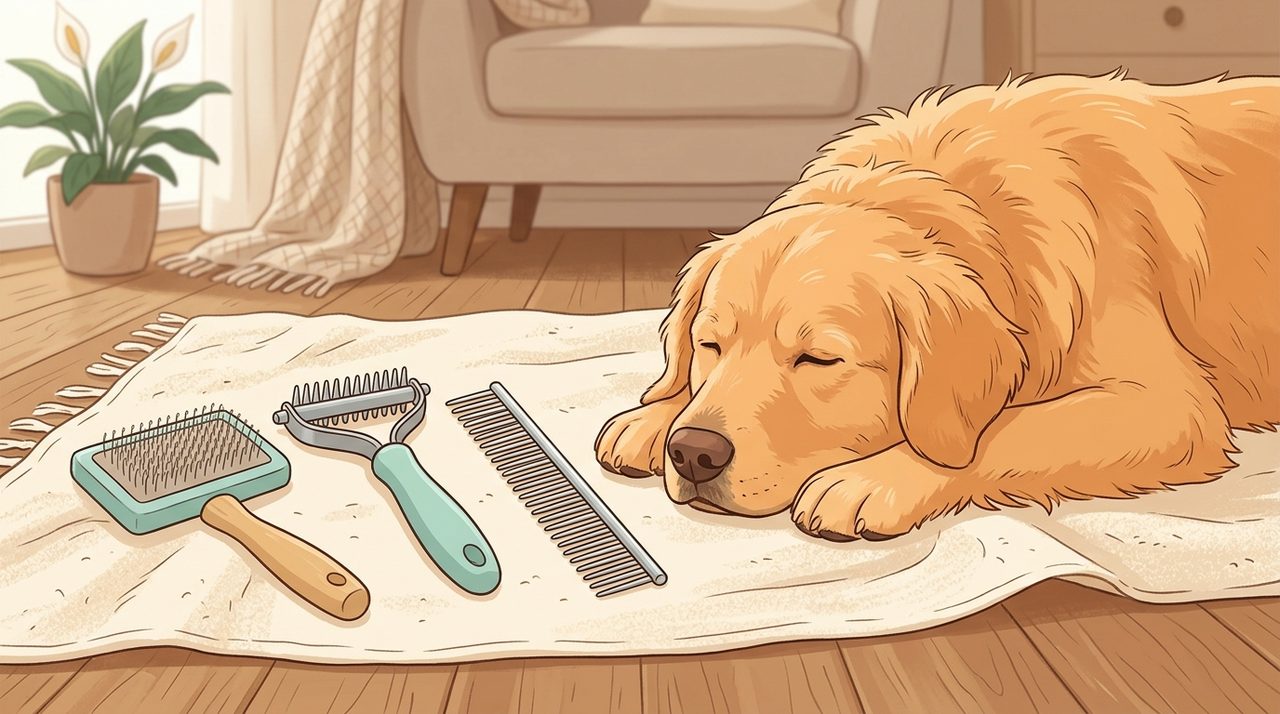
The best brush depends on your dog's coat type. Undercoat rakes work well for thick double coats like those on Huskies, German Shepherds, and Golden Retrievers. They have widely spaced teeth that reach deep without pulling the topcoat too hard.
Slicker brushes have fine, bent wires that catch loose hair and are useful for medium and longer coats. Deshedding tools with a fine metal edge remove undercoat efficiently, but they are not right for every coat. Use light pressure, avoid scraping the same spot repeatedly, and ask a groomer which tool and tooth length suit your dog. For short-coated dogs, a rubber curry brush or grooming mitt often works best and is comfortable for the dog.
If you are unsure of your dog's coat type, a groomer can identify it and recommend a tool that suits it.
How to Deshed Your Dog Safely at Home
Before you start, make sure the coat is free of tight tangles and mats. You can brush before a bath or once the coat is fully dry. Forcing a brush through mats can hurt your dog and make the mats worse. Work in the direction the hair grows, using light pressure and short strokes. Let the tool do the work instead of pressing hard against the skin.
Go section by section, and pay attention to areas that shed heavily, such as the hindquarters and flanks, and check mat-prone areas such as behind the ears and under the legs. Check the skin as you go for redness, bumps, or sore spots, and stop if your dog seems uncomfortable. Keep sessions short and positive, especially for dogs new to brushing, and offer praise or a treat afterward.
How Often Should You Deshed?
Most double-coated dogs benefit from brushing several times a week, with more frequent sessions during heavy shedding seasons in spring and fall. Short-coated dogs may only need a quick weekly brush. Long-coated breeds often need regular brushing to prevent tangles from turning into mats.
Consistency matters more than long, occasional sessions. A few minutes several times a week keeps loose hair under control and makes each session easier. Watch your own dog: if you see a lot of fur coming off or notice more hair around the house, it is a sign to brush more often. Some dogs, especially those that live mostly indoors, shed throughout the year rather than only in spring and fall, so adjust the schedule to your own dog's coat rather than the season alone.
When Should You See a Professional Groomer?
Call a groomer when shedding feels unmanageable, when the coat is matted, or when your dog will not tolerate home brushing. Professional deshedding treatments usually combine bathing, high-velocity drying, and thorough brushing to remove more loose undercoat than a typical home brushing session.
A groomer may also notice redness, lumps, sores, parasites, or other unusual changes during grooming, assess and remove mats safely, and show you techniques for your specific dog. Only a veterinarian can diagnose and treat a skin condition, so if your dog's shedding becomes sudden or excessive, or comes with bald patches, itching, sores, odor, or irritated skin, contact your veterinarian. Mobile groomers come to you, which is helpful for dogs that get stressed by travel or busy salons. Browse the city pages on this directory to find a mobile groomer near you and contact them for details.
Frequently asked questions
-
Will a deshedding brush stop my dog from shedding?
No brush stops shedding entirely, because shedding is a natural process. A deshedding brush removes loose undercoat before it falls out on its own, so you see less hair on floors and furniture. Regular use reduces the amount of loose fur but will not eliminate it, especially during seasonal coat changes.
-
Can I deshed a dog with a single coat?
Yes, but single-coated dogs need gentler tools since they lack a dense undercoat. A slicker brush, soft bristle brush, or grooming mitt usually works better than an aggressive deshedding rake. Using a heavy undercoat tool on a single coat can irritate the skin, so match the brush to the coat type.
-
Is it bad to deshed a dog too much?
Over-brushing can irritate the skin, cause redness, and damage the coat, especially if you press too hard or use a sharp-edged tool daily. Brush enough to control loose hair without scraping the skin. If you notice mild irritation, stop brushing and let the skin recover. Contact your veterinarian if you notice bald patches, sores, persistent redness, significant discomfort, or continued irritation.
-
Should I brush my dog before or after a bath?
Brush before the bath to remove loose hair and work out tangles, since water can tighten mats and make them harder to remove. After the coat is fully dry, a second brushing helps lift out any remaining loose undercoat. Do not bathe a tightly matted dog or force a brush through severe mats. Bathing can make tight tangles even harder to remove, so have severe mats checked by a professional groomer or veterinarian first.
-
How much does a professional deshedding treatment cost?
Cost depends on several factors, including your dog's size, coat type, how much matting is present, any add-on services, and where you live. Because these vary widely, the best way to get an accurate price is to contact a mobile groomer listed on this directory's city pages and ask for a quote based on your dog.
This article is general grooming information, not veterinary advice. For any concern about your dog's skin, coat, or health, consult a veterinarian.