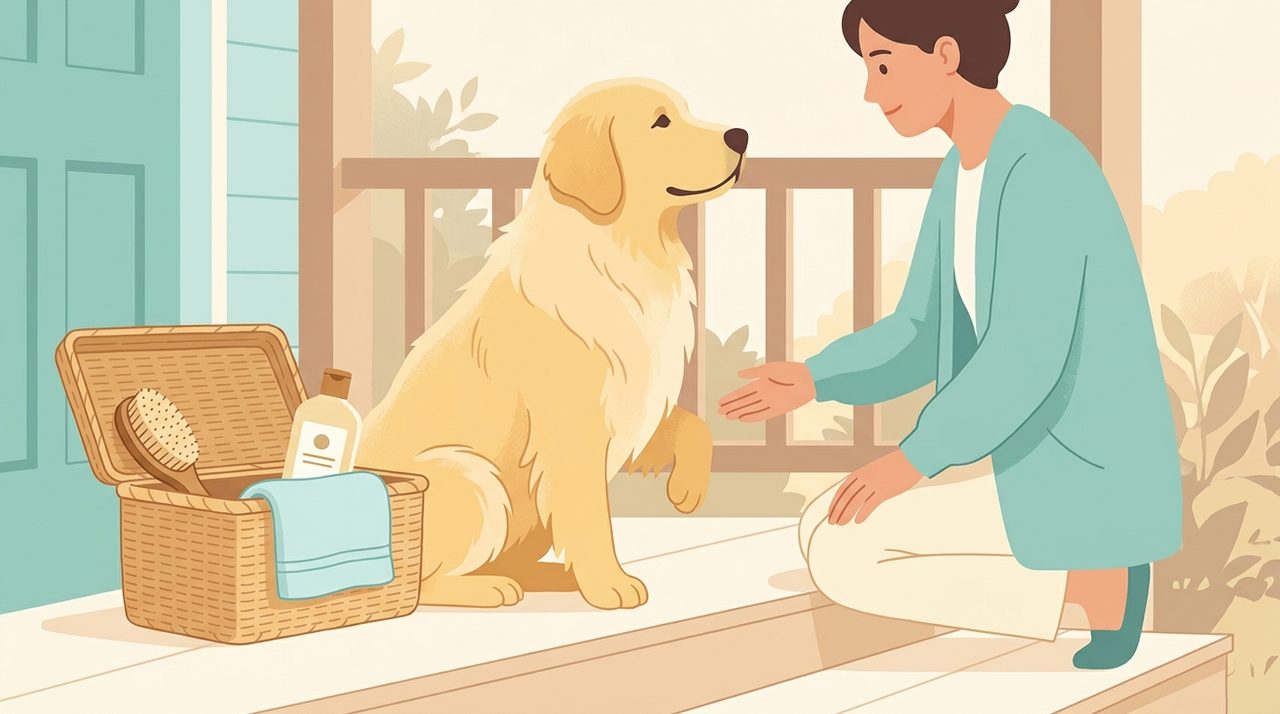
No two dogs need exactly the same grooming routine, and "how often" really has several answers at once. Grooming is not one chore but a handful of small habits that run on different clocks: brushing comes around far more often than baths, and teeth need attention more often than nails.
Here is a simple schedule to start from, followed by how to tune each part to your own dog's coat, skin, and lifestyle, plus when a job is better handed to a groomer or a vet.
Your dog's grooming schedule at a glance
Dogs vary, but this is a reasonable baseline you can adjust from:
- Brushing: daily for long, silky, or curly coats; about once a week for short, smooth coats.
- Bathing: when your dog is dirty or smelly, or roughly once a month, sooner or later depending on coat and skin.
- Nail trims: about every three to four weeks, or whenever you can hear nails tapping on hard floors.
- Ear checks: often; actual cleaning only when it is needed.
- Tooth brushing: daily if you can manage it, and at least a few times a week otherwise.
- Haircuts: often every four to eight weeks for continuously growing coats such as Poodles and many Poodle mixes. Many other breeds do not need regular full haircuts, though some benefit from breed-specific trimming.
The sections below explain how to read your own dog and adjust each of these.
Brushing: let the coat set the pace
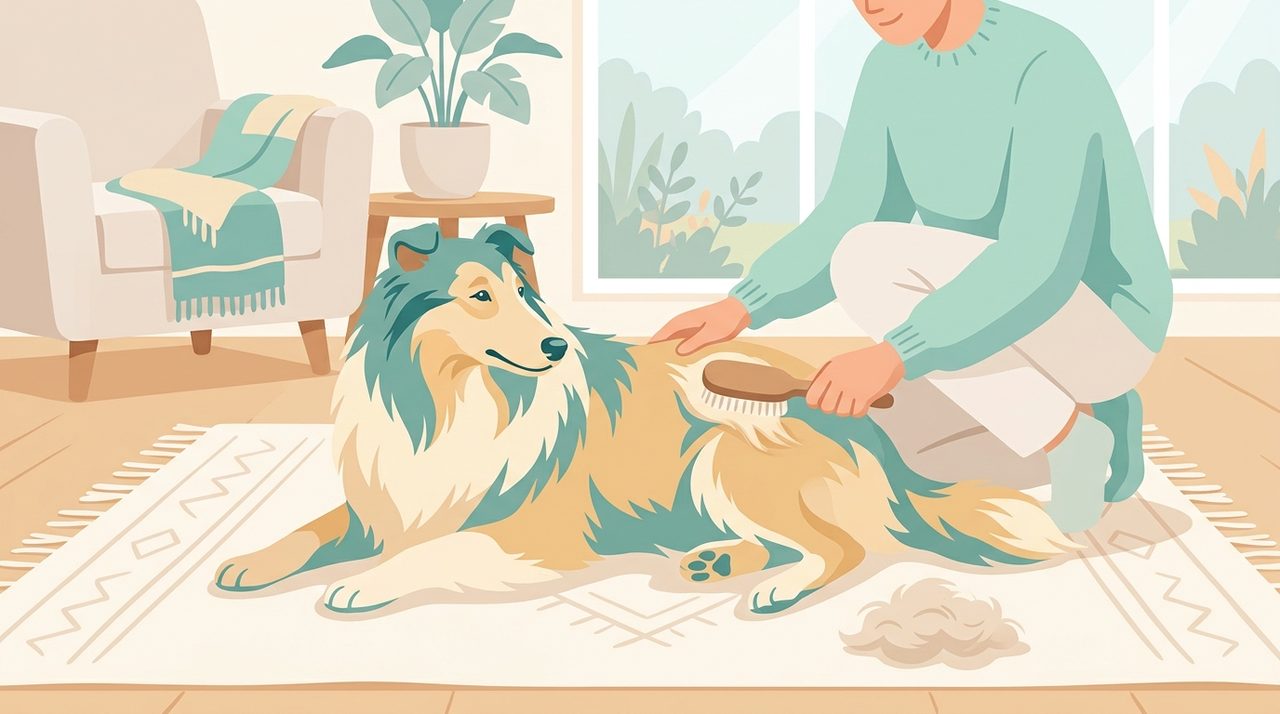
Coat brushing is one of the grooming tasks you will do most often. It clears out hair your dog has already shed before it can mat or land on the furniture, and it works the skin's natural oils through the coat. How often you need to do it comes down mostly to coat type.
Long, silky, or curly coats tangle easily and usually want brushing every day, with extra care where the coat rubs and shifts: behind the ears, in the "armpits," and around the groin. Short, smooth coats are far more forgiving. Once a week is a fair starting point, with extra sessions when your dog is shedding hard. Whatever the coat, a quick daily once-over with your hands is worth the minute. You may catch tangles, lumps, fleas, or sore spots while they are still small.
Bathing: clean, but not too often
How often to bathe depends on the dog. Some do well with a bath about once a month; others only need one when they roll in something or start to smell. Dogs with continuously growing, low-shedding coats are often bathed on the same six-to-eight-week cycle as their haircuts. Coat, activity, skin health, and your vet's advice all move the number around.
Over-bathing can backfire. Washing more often than the skin can tolerate can strip protective oils and leave the skin or coat dry and irritated, especially with the wrong shampoo or a rushed rinse. Go too long, though, and oil, dirt, and odor build up on dogs that need regular washing. Use a shampoo made for dogs rather than a human one, which can irritate their skin. One exception cuts the other way: dogs with allergies or skin conditions are sometimes prescribed frequent medicated baths, which is a vet's call, not over-bathing.
Nails, ears, and teeth
Nails generally need trimming every three to four weeks or so. A good cue is sound: if you can hear them tapping on a hard floor, they are due. Dogs that walk a lot on pavement wear their nails down naturally and may need trims less often.
Ears should be checked often but cleaned only when needed, or on a schedule your vet recommends. If you notice new or persistent discharge, odor, redness, swelling, or pain, contact your vet before cleaning, since these can be signs of an ear problem.
Teeth need the most frequent attention of all. Daily brushing with a dog-safe toothpaste is ideal. If daily brushing is not realistic, several times a week may still help, but daily brushing provides the most reliable plaque control. Your vet can recommend a home routine and tell you when a professional cleaning is needed.
Shedding, mats, and when to bring in a pro
Shedding follows the coat. Many double-coated breeds shed clumps of undercoat in spring and fall and need extra brushing for a few weeks each time. Many short-haired dogs, and some dogs kept mostly indoors, shed more steadily all year instead, so track your own dog's rhythm rather than the calendar. Sudden or patchy shedding, or new bald spots, are worth a vet visit, since brushing will not fix a health problem underneath.
Mats are easiest to handle before they set. Check the friction points (behind the ears, the "armpits," the groin) and work small tangles loose before bath time, because water tightens a mat and makes it harder and more painful to remove. Never try to cut a mat out with scissors; the skin is often tented up inside it and easy to nick. Tight or widespread mats belong with a professional groomer. Raw skin, open sores, or any sign of infection call for a veterinarian, and a badly matted or very anxious dog may need to be clipped under veterinary supervision.
A groomer earns their keep on exactly these hard cases: safely removing mats, often by clipping tight ones, managing thick or curly coats, trimming nails, and maintaining continuously growing coats. Many owners combine regular brushing at home with a standing groomer appointment. Prices swing with your dog's size, coat, matting, and any add-ons, so ask for a quote directly. You can use our city pages to find a mobile groomer near you.
The bottom line
Grooming is less one big chore than a set of small habits on different timers. As a rough starting point: brush most dogs at least weekly, bathe them when they are dirty or smelly (or as their coat and any skin needs dictate), trim nails about monthly, check ears regularly, and brush teeth as close to daily as you can manage. Then let your own dog's coat, health, and life fine-tune the rest, and lean on your vet or groomer whenever you are unsure.
This guide pulls together general, widely accepted guidance from veterinary sources including VCA Animal Hospitals, the Merck Veterinary Manual, the American Animal Hospital Association (AAHA), and the American Veterinary Medical Association (AVMA).
Frequently asked questions
-
How often should I groom a short-haired dog?
Brushing about once a week is a reasonable starting point for short, smooth coats to lift loose hair and spread natural oils, with extra sessions during heavy shedding. A bath every month or so, or when they get dirty or smelly, suits many short-haired dogs. Rather than checking for tangles, watch short coats for excessive shedding, redness, lumps, parasites, or other skin changes.
-
How often should I groom a long-haired or curly dog?
Long, silky, or curly coats often need daily brushing to prevent tangles and mats, especially where the coat rubs: behind the ears, the armpits, and the groin. Dogs with continuously growing coats, such as Poodles and many Poodle mixes, may also need professional clipping every four to eight weeks. Other long-haired breeds usually need brushing and occasional coat-specific trims rather than regular full haircuts.
-
Can I bathe my dog too much?
Yes. Washing more than your dog's skin can tolerate can strip natural oils and leave the coat dry, especially with harsh products. But waiting too long can cause odor and buildup, and some dogs with skin conditions need frequent medicated baths under veterinary guidance. Many healthy dogs do well bathed about once a month, or simply when they get dirty or smelly.
-
Should I brush more during shedding season?
Often, yes. Many double-coated dogs shed more heavily in spring and fall as they lose undercoat, so extra brushing helps during those weeks. Other dogs shed more steadily year-round, so follow your dog's own pattern. If shedding turns sudden or heavy or comes with bald patches, contact your veterinarian.
-
What should I do if I find a mat?
Never cut a mat out with scissors, since the skin underneath is easy to injure. You can gently work very small, loose tangles free by hand or with a brush before bathing, since water tightens mats. Leave true or tight mats to a professional groomer, who can often clip them out safely, and if the skin under a mat looks irritated or sore, take your dog to a veterinarian.
-
How often do dogs need their nails and teeth done?
Most dogs need a nail trim about every three to four weeks, or when you can hear clicking on the floor, though active dogs may wear their nails down and need it less often. For teeth, daily brushing with dog-safe toothpaste is ideal. If daily is not realistic, brush as often as you can; several times a week may still help. Your veterinarian can advise on nail care, brushing, and professional dental cleanings.
This article is general grooming information, not veterinary advice. For any concern about your dog's skin, coat, or health, consult a veterinarian.